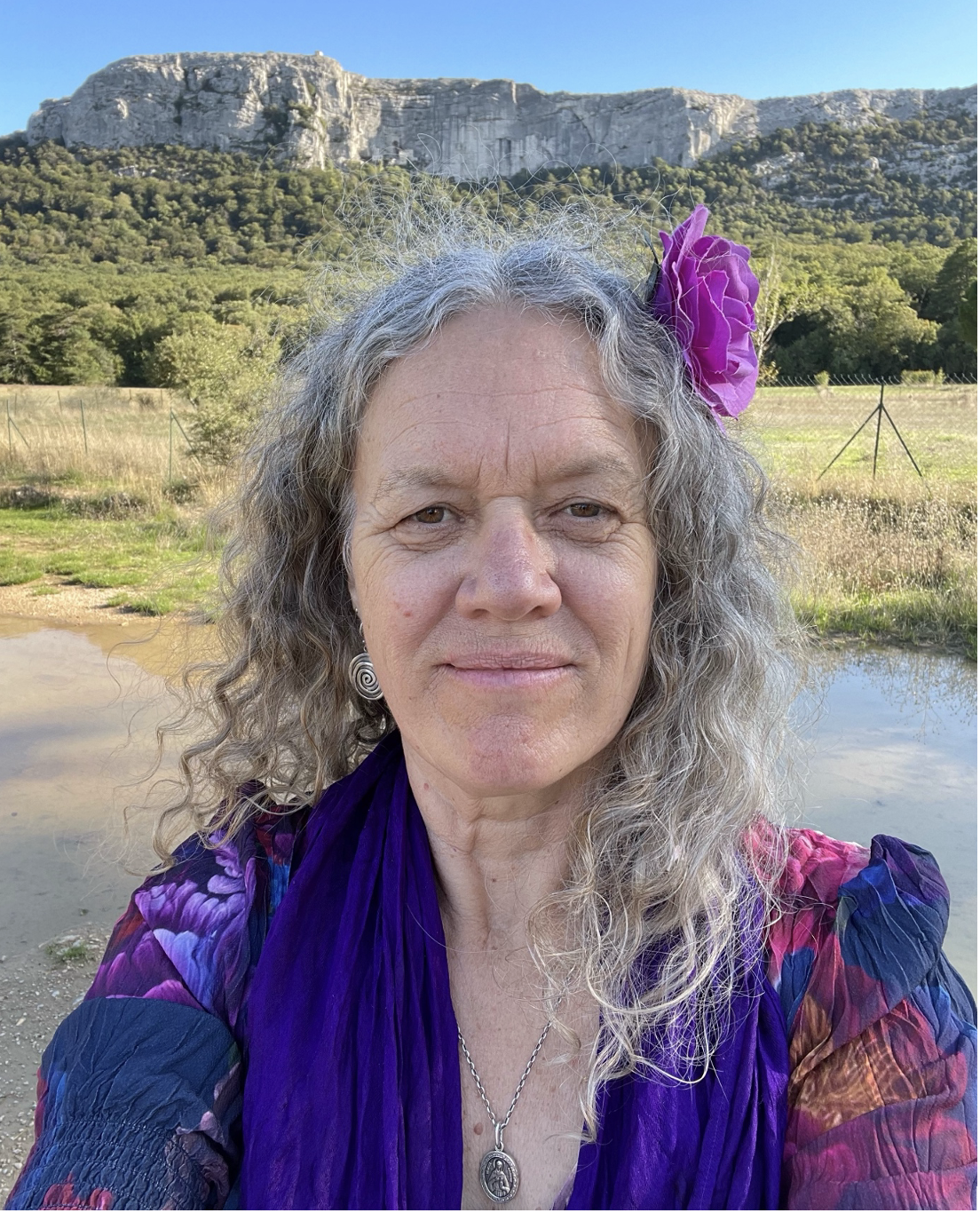
She Walks Me Home: Encountering Mary Magdalene - By Catherine Gilberd
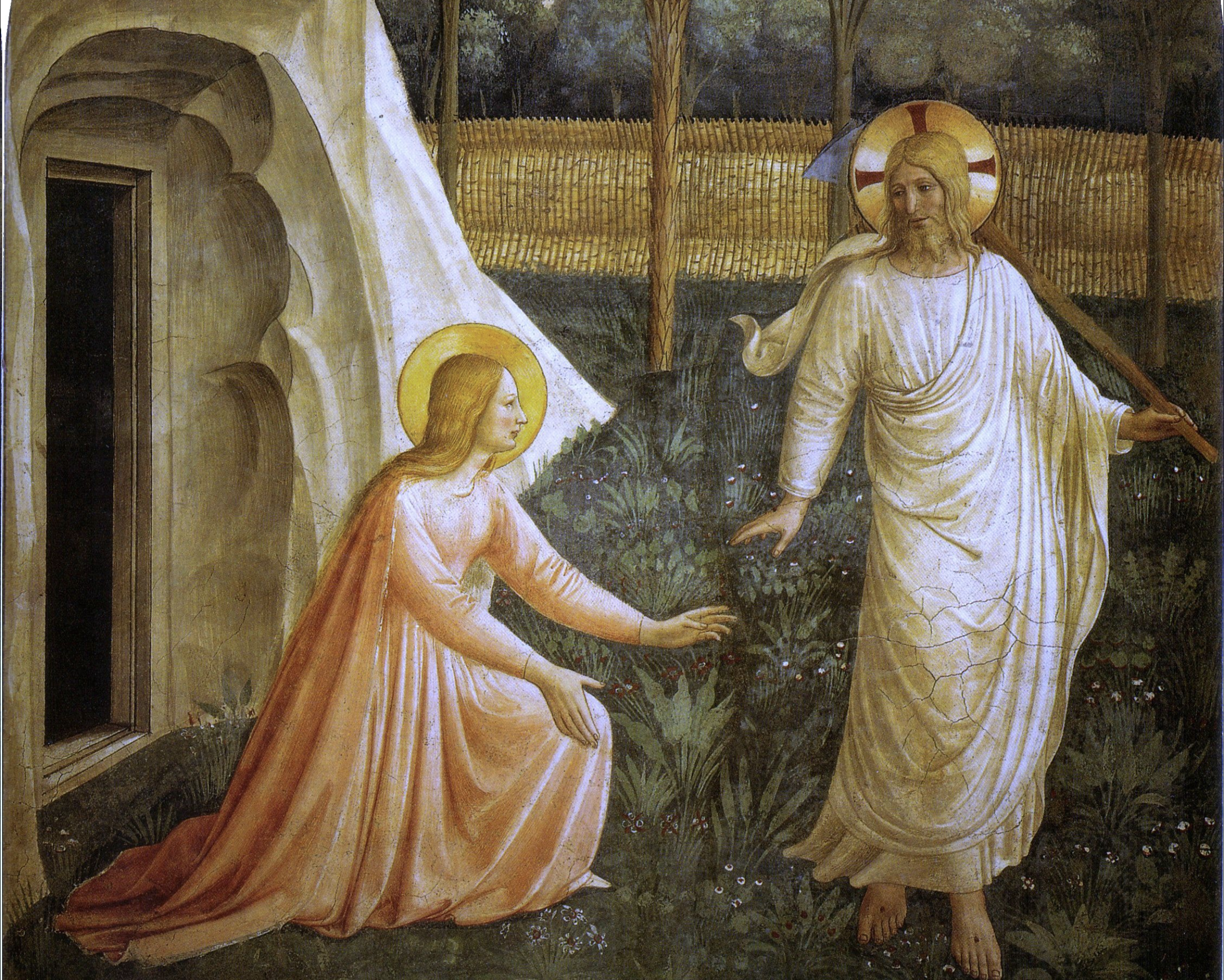
Fra Angelico, “Noli me tangere” (c.1440), public domain.
In recent years, the figure of Mary Magdalene has been re-examined within the Christian wisdom tradition, opening up new ways of seeing her role and significance. In this personal reflection, Catherine Gilberd invites us into her own encounter with Magdalene, shaped through research, inspiration and pilgrimage. Those familiar with Cynthia Bourgeault’s work will recognise this thread—an honouring of embodied knowing and the re-emergence of an important feminine figure within our faith lineage.
I am sitting in meditation during a retreat on the Coromandel Peninsula. Gentle music is playing. My eyes are closed. I am relaxed in my body and breath. That’s when, from within, I am transported to another time and place. There is a female figure, we are outside amongst green trees and grasses. She comes toward me, a bold and loving presence like never before. She has my full attention, and I am there with her. With each beat of the music, she shows me my teachers over my lifetime. They come in images. I am drawn deeply into her loving, all-encompassing GAZE, her full presence. I realise she is Mary Magdalene, and that she is giving me a gift. The gift is an earthen vessel.
This transformative experience occurred just before we went into COVID lockdown in February 2020. It pierced my ordinary everyday awareness and shifted me on my axis. Since then, I have been in an ongoing rich meaning-making process, reading and researching widely, seeking the deeper story of Mary Magdalene.¹ This led to me going on a pilgrimage to southern France in September 2024.
Just over two years ago, my father received a terminal cancer diagnosis. I spent time with him as he was dying. Sometimes talking, often in shared silence. He died within weeks. I was close to my dad, and grieve the loss of his felt presence in my life. He was an enthusiastic and warmhearted person. We could talk openly with each other, often contesting ideas and allegiances around spirituality and religion. My dad was a priest and later a bishop. Growing up, our family life largely revolved around his roles within the Anglican church. We moved from parish to parish, to the north east of England and back to Aotearoa.
I became a feminist at a young age. It helped me survive the deadening effect of being immersed within the patriarchal church. Sitting on hard wooden pews beside my mother and two younger brothers each Sunday. Bored and struggling to breathe.
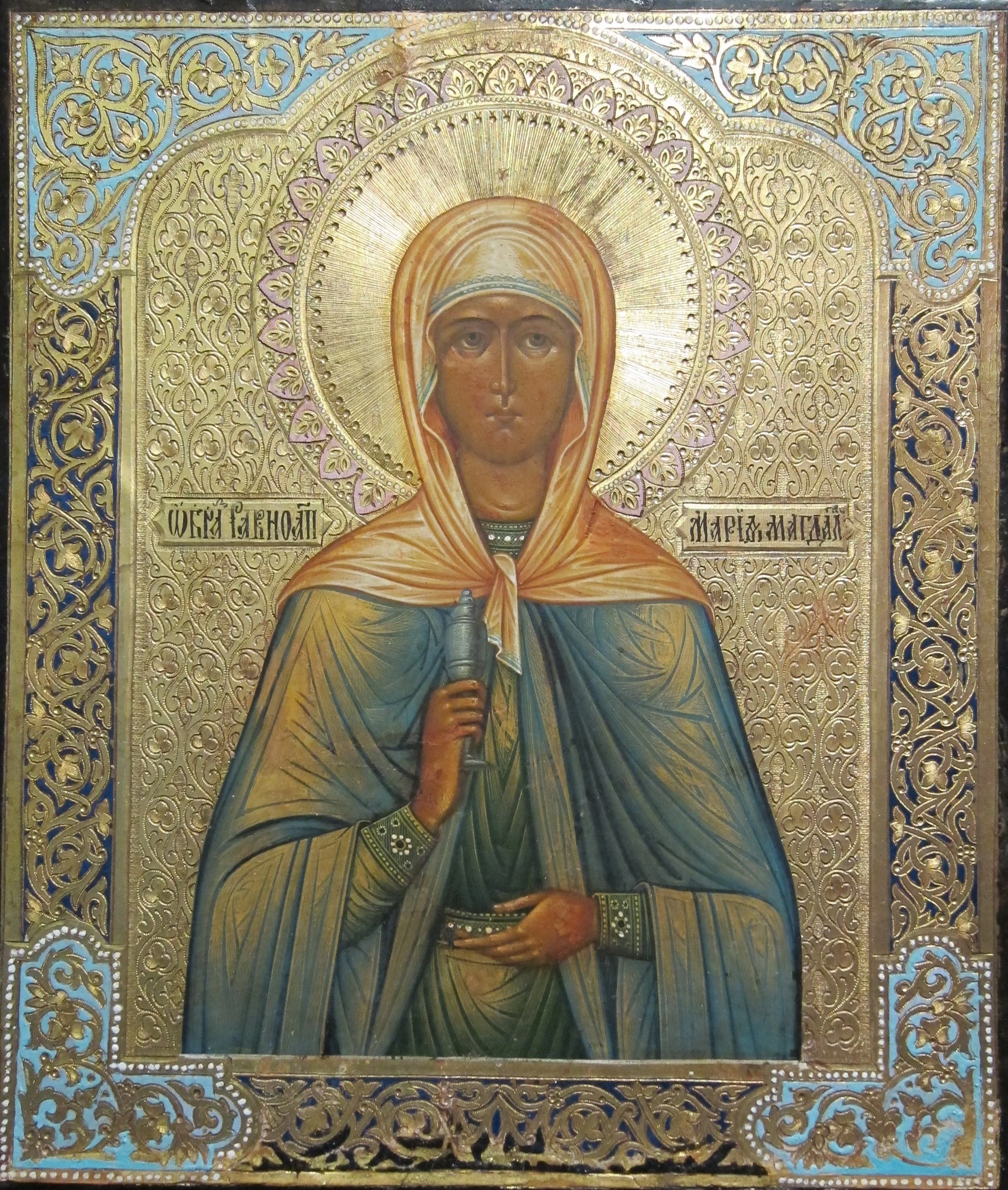
Mary Magdalene, honoured in the Eastern Christian tradition as “Equal to the Apostles.” (Russia, c.1890), public domain, via Wikimedia Commons.
It’s hard to recall any sermons that had strong female figures at the centre. Mary Magdalene had been maligned by the church as a prostitute, which I have since discovered is far from the truth. She has been hidden in plain sight all along.
I learned that Magdalene’s name means Tower of Strength. She was the Apostle to the Apostles. She was Miriam, the beloved companion (konoinos) of Yeshua, and she deeply understood his teachings.
Magdalene was the one to anoint Jesus (Christ meaning ‘anointed one’) with precious spikenard oil from her alabaster jar. She remained at the foot of the cross and was the first witness to the resurrection. She did not waver and had the eyes to see.
After the crucifixion and resurrection Magdalene reputedly went to live and teach in France for the second half of her life. There is a tradition of venerating and celebrating her throughout the centuries in France which continues to this day. The Gospel of Mary was buried, burned and forgotten, and is now re-emerging. Found within earthen vessels in the Egyptian desert, the only gospel in the name of a woman.
During the 300 years after the Jesus event and before the Council of Nicaea in 325, there were diverse Christian communities in many places and cultures. Referred to as a ‘riot of pluralism’ by theologian Karen King. Many of these communities were familiar with teachings from gospels that were subsequently left out of the bible by the church. A common theme of these scriptures is the process of inner transformation, direct embodied inner knowing or gnosis, accessing wisdom and power from within.
The term anthropos is used, translated by theologian Meggan Watterson as meaning we are both fully human and fully divine. This resonates with me, holding these two experiences together within ourselves, rather than seeing human and divine as separate.
Reading the Gospel of Mary I am moved to hear Magdalene’s own voice come through the words. She tells the other disciples about seeing Jesus in a vision.
“Mary said to them: I will now speak to you of that which has not been given to you to hear. I had a vision of the Teacher, and I said to him: ‘Lord I see you now in this vision’. And he answered: ‘You are blessed, for the sight of me does not disturb you. There where is the nous, lies the treasure’. Then I said to him: ‘Lord, when someone meets you in a moment of vision, is it through the soul (psyche) that they see, or is it through the Spirit (Pneuma)?’ The Teacher answered: ‘It is neither through the soul or the spirit, but the nous between the two which sees the vision …” ²
The inner experience of the nous is referred to as the spiritual eye of the heart or the window into the soul. Magdalene’s leadership is based on this deep inner knowing. Her question is about how we perceive the divine directly from within. The ascension in the Gospel of Mary is more a descent into the heart, to receive from within.
The experience of pilgrimage was introduced to me by my parents during my twenties when I was living in Europe. I joined a youth pilgrimage and as a group we visited Rome, Assisi, Taizé and other places. Subsequently my father and I went on pilgrimages together, visiting Iona, Lindisfarne, Norwich and Ireland. We shared an interest in ancient sacred sites and the natural world. I worked on a passenger boat on the river Rhine in Germany for a time. The boat regularly stopped overnight beside the Abbey of Hildegarde of Bingen, where I would sit and talk with the nuns, savoring quiet time in the gardens.

Massif de la Sainte-Baume, France. Photo by Jodelet / Lépinay via Wikimedia Commons (CC BY-SA 2.0 FR).
However, this more recent pilgrimage to southern France was different. Far more intentional on my part. I decided to go alone, from Aotearoa to France, to join a group of women I had never met, to attend a retreat focused on Magdalene and her teachings and travelling as a group to visit her sacred sites.
I am appreciative of the support from close family and friends. The pilgrimage started the night before I left the shores of Aotearoa, when a friend anointed me for the journey ahead. We both felt tethered to a sacred holding for the duration of my time away. There was a sense of stepping into an unknown liminal space, of being awake to what might unfold. The journey from Aotearoa to the retreat, two hours from Marseilles, allowed inner preparation time.
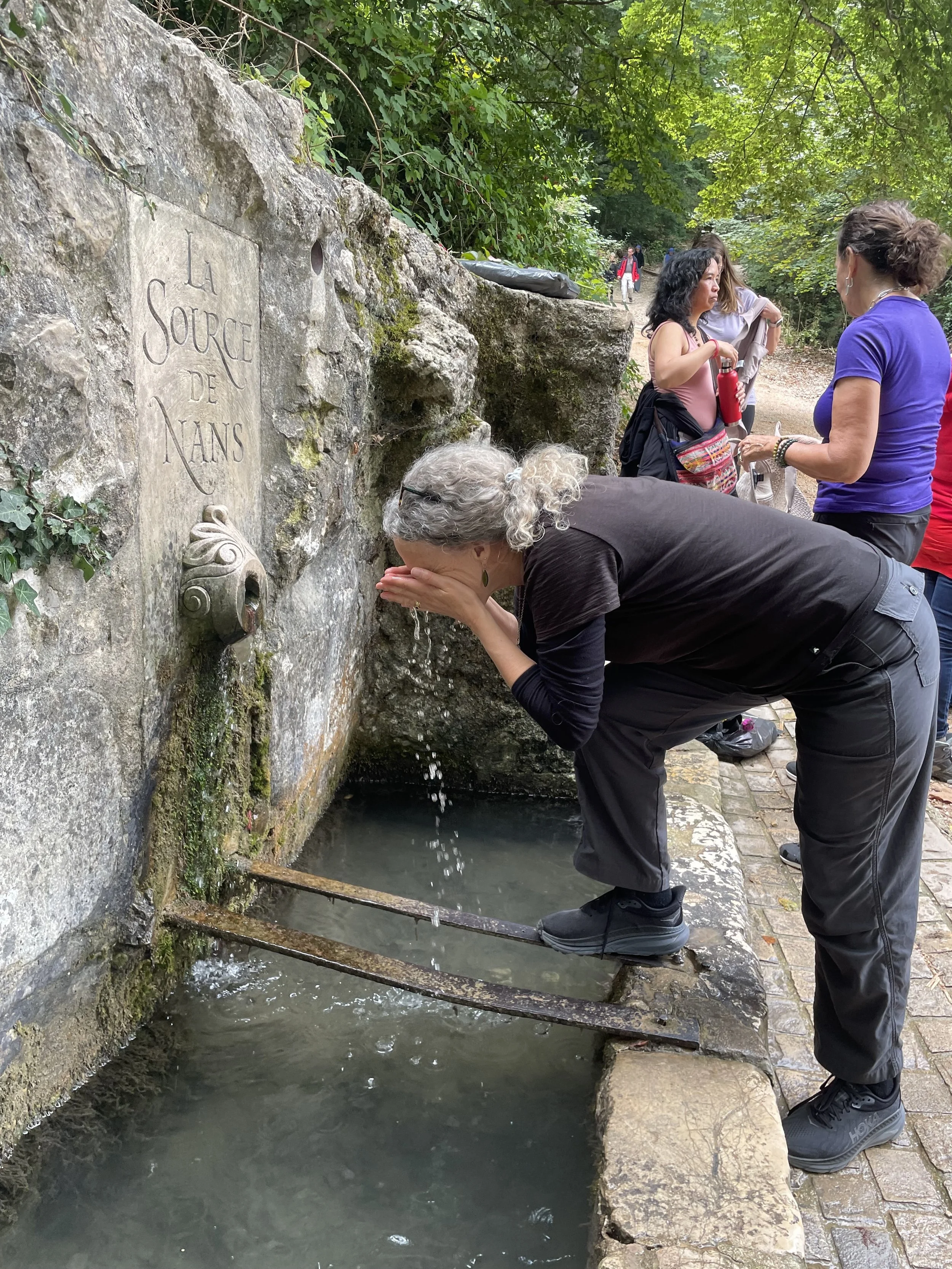
From the moment I met Dr Nicola Amadora, our lineage teacher, I knew I was in the right place. I warmed to her immediately, feeling a kinship. We were a diverse group of 16 women from many countries and backgrounds. Nicola was experienced in creating a sacred container, a temenos, for our time together.
We began each day as a group with a meditation and teaching, then walked through the forest, and up the St Baume mountain paths. Spending time in a circle, a meadow or under the trees. Singing and sharing, as well as in silence.
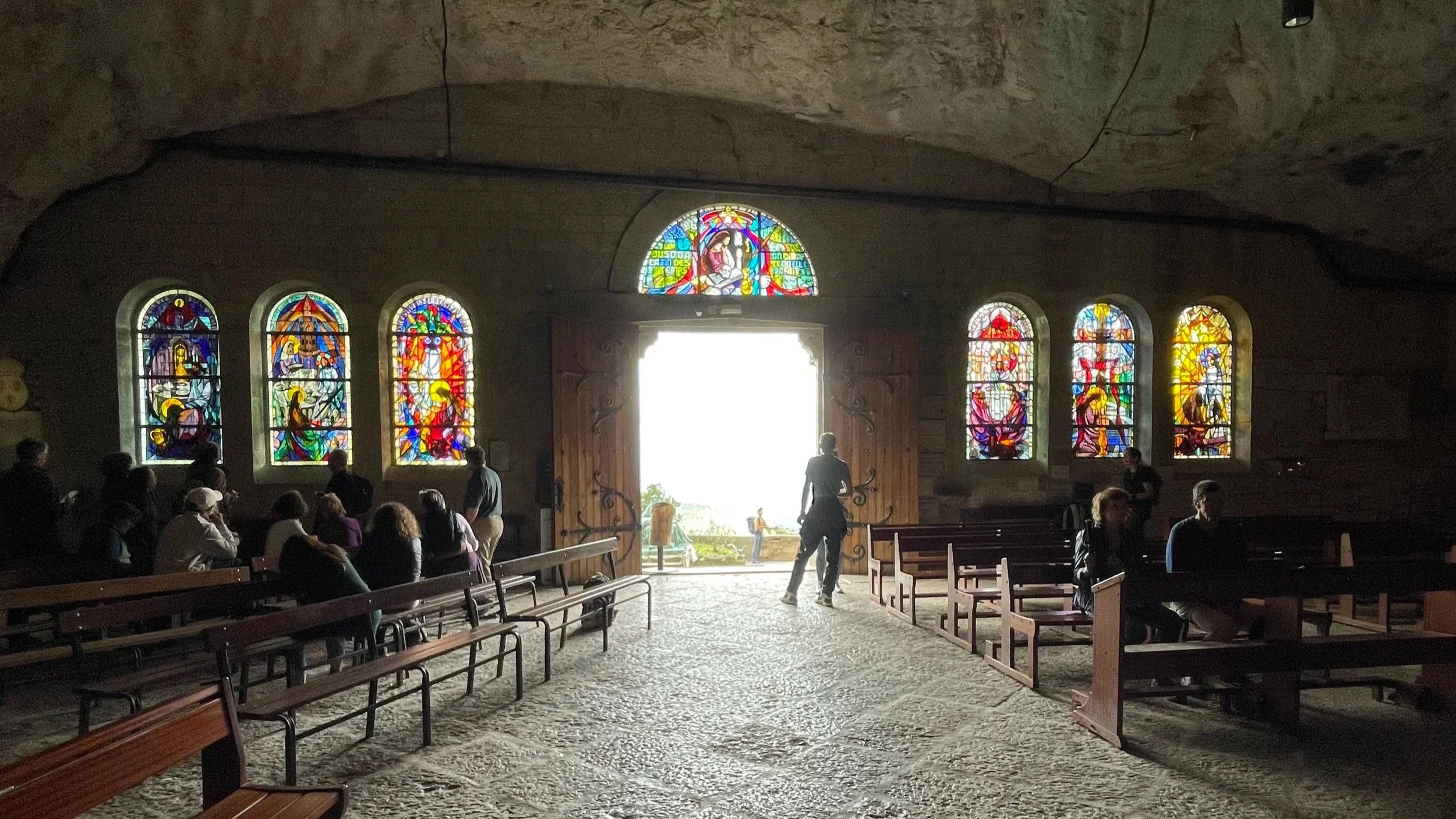
We visited the Basilica of Ste. Marie Madeleine in the town of St Maximin-la-Sainte-Baume, the Magdalene Chapel at the Dominican Hostellerie and the Sainte-Baume Grotto set within an ancient cave in the mountainside ³ All sacred spaces of devotion.
The heart of the pilgrimage for me was visiting another cave set deep in the St Baume mountain. We prepared inwardly and outwardly for traversing up the mountain as a group, moving as one. A collective of women coming in reverence into this sacred feminine temple, aeons old, deep within the earth. Sliding down into Her cavernous embrace by candlelight we entered into an ancient timeless flow.
What I have learned from this pilgrimage is a profound respect for embodied, experiential knowing. Sacred knowing - beyond the mind, words and description. This is the ‘treasure’ referred to in Mary’s gospel.
The ongoing learning is integrating these experiences into ordinary everyday life. Remembering and allowing what is seeking to emerge, through contemplation, walking and creating. Simply being present within each day, whatever it may bring.
¹ Some of the books I have found resourcing and recommend for those interested to explore further: Cynthia Bourgeault, The Meaning of Mary Magdalene: Discovering the Woman at the Heart of Christianity and The Wisdom Jesus; Erin Vearncombe, Brandon Scott and Hal Taussig, After Jesus Before Christianity; Jean Yves Le Loup, The Gospel of Mary Magdalene and The Gospel of Philip; Karen King, The Gospel of Mary; Jehanne de Quillan, The Gospel of the Beloved Companion; Meggan Watterson, Mary Magdalene Revealed, Elaine Pagels, The Gnostic Gospels
² Jean-Yves Le Loup: The Gospel of Mary Magdalene (2002) p31
³ These caves were consecrated by John Cassian (AD360-435), a Christian monk known to have brought monasticism to the West. John Cassian died and is buried in Marseilles, France.
Catherine Gilberd has enjoyed a lifelong interest contemplation and meditation. Over the years she has returned to Christianity through remembrance of its deeper roots and the wisdom tradition. She has an established psychotherapy and supervision practice, having originally trained in psychosynthesis. Catherine resides and works in Te Awakairangi Lower Hutt. She can be contacted by email: cath.gilberd@gmail.com or via her profile page on the Talkingworks website.