This article is published in the ‘Creativity’ summer 2026 issue of Refresh Journal of Contemplative Spirituality.
BY ANDREW KILLICK
Creativity is, in many respects and to a quite profound degree, a way of being in the world.
It's to move through the world with a kind of open humility, an awareness, the ability to notice, to make meaning, to hold space, to foster depth perception (a perception of depth), to approach the world with an ‘I-Thou’ (rather than I-it) attitude, to be open to wonder and thereby the possibility of awe, to see ‘inscape’ as Gerard Manley Hopkins called it, to make connections in what Charles Williams called ‘the web of diagrammatised glory’ – the pattern and underlying schematic, or tapestry, of life. There are many overlaps with the contemplative life, and so it also has something to do with love.
Evelyn Underhill spoke of ‘the double movement of Transcendent Love, drawing inwards to unity and fruition, and rushing out again to creative acts…’ Matthew Fox (drawing on the thought of Meister Eckhart) charts a spiritual pathway – via positiva, via negativa, via creativa, via transformativa[1] – whereby the vicissitudes of life, the good times and the bad, the presence and the absence, lead, through creativity, to outflow and the possibility of transformation.
In moving through the world like this, we are ourselves embodying imago Dei – there is a kind of divine trinitarian essence or aspect to it.
Thinking through my own creative practice - way of being in the world - in a theological and sometimes theopoetic way, the theme that has arisen foremost for me is the concept of sacramentality.
To live sacramentally is to live in a world rich with metaphor, symbol and meaning.
It’s to live with a deep appreciation of the just-is-ness of things, a simplicity of things loved simply for what they are, and the simple present moment, but also to be open to the possibility of witnessing transfiguration[2] as it were, the revelation of glory, and to be aware of the depth of things, their profundity, the meaning that infuses it all.
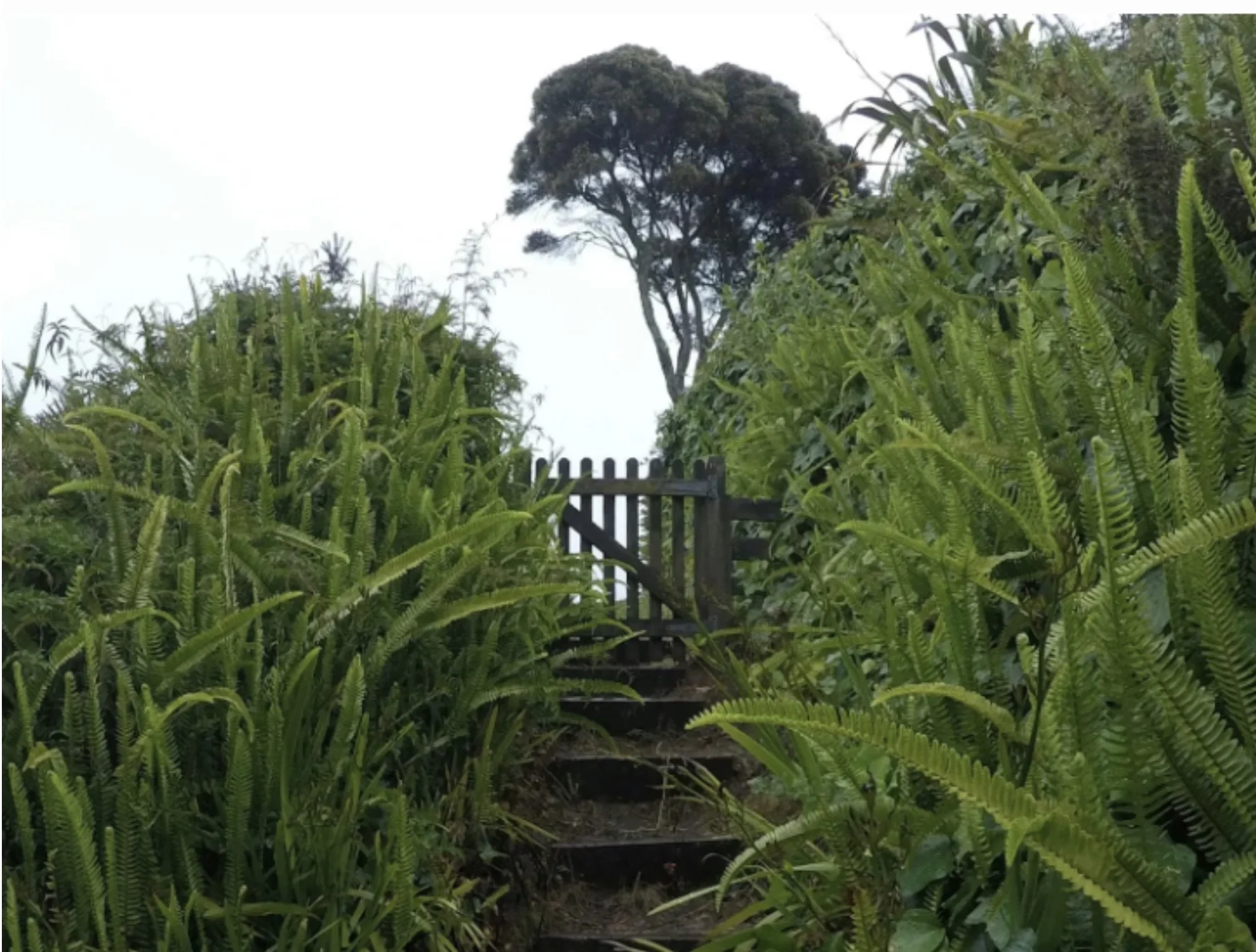
To love a tree simply as a tree, perhaps to be astonished by a realisation of a magnificent beauty, a glory,[3] and also to know the meaning of ‘tree’ with all its accumulated symbolic connotations and what it might tell us about things at deep and resonant levels. A deep love for both immanence and transcendence, becoming and being, an embodied awareness of meaning.
Iain McGilchrist has this to say about metaphors, and in so doing also ‘accidentally’ gives an interesting insight about the sacramental, complete with its embodied (incarnational) aspects:
‘It is the metaphors which provide the “something else” which we know more intimately from our embodied, preconceptual experience, and to which we are, in every word we use, properly understood, making a comparison. It is metaphors that carry us across (that is what the word “metaphor” means) the implied gap between language and the world,[4] and make what would otherwise be a hermetically sealed system of signs capable of meaning something in terms of embodied experience. They are how we understand everything.’
Metaphor is not ‘mere’ metaphor. It is not the vague imitation of reality. It is the conduit of reality.
The act of creativity is to foster metaphor (whether in language, movement, sound, object, image or, indeed, silence and stillness), such that the sacramental takes shape in the world, with the possibility of the divine appearing.
None of this is foreign to us, although it may need rediscovery in our post-‘enlightenment’ culture. Apart from the Christian tradition and relevant ancestry (for me, Gaelic and Anglo-Saxon), it is here in the land, here in the whenua, of Aotearoa.
Witi Ihimaera (Te Whānau-a-Kai, Te Aitanga-a-Māhaki, Rongowhakaata, Ngāti Porou, Tūhoe): ‘…I mean te ao Māori has this highly complex construction that reaches beyond the physical. I like to say, actually, that I grew up in a world “drenched in the divine”. I grew up with the idea that there was a mauri – a life force; there was an eke – an energy; there was a mana – strength; there was a wairua – a spirit; there was a tapu – a sacredness; there was a wehi – a dread;*****[5] and there was an empowering hā – the breath of life. Karakia was a way of accessing the divine.’
It’s deep, it’s profound, but it's also commonplace and inherent. The interweaving, exploration and communication (communion) of all this is where creativity takes us.
[1] As I understand it, the terms Eckhart uses are actually (and in a slightly different conceptual order): inbilden (inform), entbilden (deform), überbilden (transform) and widerbilden (counterform).
[2] The Transfiguration is a particularly important event in the life of Christ for this way of being in the world. The Incarnation is of course the peak instantiation.
[3] Language itself becomes sacramental, a word like ‘glory’ is charged with meaning and connotation.
[4] Dare we extend this concept to logos and incarnation?
[5] I like to reference this to the wider concept of mysterium tremendum et fascinans developed by Rudolph Otto in his book The Idea of the Holy.
Other notes: The concept of ‘I-Thou’ comes from Martin Buber. The phrase from Charles Williams is found in his book The Forgiveness of Sins, and the concept also arises in He Came Down from Heaven. The phrase from Evelyn Underhill is found in her book Practical Mysticism. Matthew Fox explores the fourfold pathway in Original Blessing. The quote from Ian McGilchrist comes from The Divided Brain and the Search for Meaning. The quote from Witi Ihimaera comes from a kōrero with Aparecida Vilaça and Dame Anne Salmond, ‘An appreciation of mentors’, in A Kind of Shelter Whakaruru-taha.
ANDREW KILLICK is a contemplative, thinker, artist and publisher. Creatively, he predominantly works in the areas of photography and writing (poetry and prose) with books as his primary medium, under the moniker Safe Little World.
See www.safelittleworld.com, www.sacramentofbreathing.wordpress.com and www.shadowpress.co.nz